
Back in 2012, a smartphone allegedly passed an actuarial exam. Just over a decade later, that smart phone is now the Chief Actuary for a global insurer.

As usual, we will spotlight current trends, impacts on actuarial modeling, and any newly emerging implications in our post-COIVD world.
Past episodes:https://betweenthespreadsheets.blogspot.com/search/label/viralvirus

For the latest talk, we pull from the movie HER and dive into how we connect with the tech. We went into AI in eldercare, getting married to a chatbot, and then how the AI world will meet the adult content world. Finally, we come back to music, with another Sam Altman project to beam soundwaves into your brain.
I learned of Scott's passing this morning.

I always considered myself a glass half full, make lemonade from lemons, kind of guy.

Yet the grind of deadlines, high stakes of errors, minimal recognition and feedback, and getting weeks of work tossed in the trash ate at my soul.
Then, in a bookstore in a mall, The Dilbert Principle fell into my lap.
As he introduced the book, he shared his epiphany about the reason people and corporations do dumb things. PEOPLE ARE IDIOTS. It seems harsh at first, but he quickly follows with "INCLUDING ME..."
To elaborate further:
“Everyone is an idiot, not just the people with low SAT scores. The only difference among us is that we’re idiots about different things at different times.”
AND
"Life is just too complicated to be smart all the time."
The rest of the Dilbert Principleis a tour de force with humorous quips on everything corporate: meetings, marketing, vision statements, and of course management.
I devoured the book and suddenly, everything that I was taking SO seriously was put to a funhouse soundtrack. It made life bearable again. I saw my coworkers in a new light. We were all dancing monkeys in a way.

This didn't mean that the work we did was unimportant or had no value. Rather, I felt like I was given permission to have FUN. And so I did.
I added quirky signatures to out-of-office messages. I made the month-end meetings a vocabulary contest. We tried to catch buzzwords at townhalls.
And in this, a new purpose was forged. I didn't come to work to do a job anymore. I came to the cubicle zoo with the intent to bring joy and spread happiness. I learned to approach my work as a way to make somebody's life better. And turns out making people laugh and smile is a great way to get through the day.
Between The Spreadsheets emerged as a cross between The Onion and Scott Adams. It has evolved a bit more into some otherstuff, but the undercurrent remains. I am always scanning for ways to spotlight absurdity and bring a smile to the world.
And I have Scott to thank for that.


Back in 2015, I wrote my first long range prediction post: Nate-radamus. I said 30 years+ then, but let's add 5 years and target 2050 because that is cooler than 2045.
For this update, we will see how they have aged so far, and add a few adjustments or new ones:


You know you are in for a ride when the first pages of a book put you with a blood splattered figure in the back of an ambulance.
A common theme in the OMNI world is the fusion of man and machine. Here, an article spotlights the collaboration between Open AI's Sam Altman and iPhone designer Jony Ive.
https://futurism.com/the-byte/sam-altman-openai-wearable-device.
https://youtu.be/di6emt8_ie8?si=dXNQodVHEyvrVwXP
For a bit of Big Brother and Mark of The Beast, why not try a face tattoo that records your emotional state?

https://www.futurity.org/electronic-tattoo-stress-boredom-work-3283952/
Tech isn't alwas bas - is it? - How about DNA editing to save a fatal genetic disorder? How quick does this slip into designer babies?
https://youtu.be/dOeiPoa3gvM
The founder of 23andMe almost lost the vast database of human genomes until she recently bought it back. What is also crazy is that she also was once married to a Google co-founder, was in charge of YouTube, and has a degree in physics.

https://en.m.wikipedia.org/wiki/Anne_Wojcicki
5. Amusing Ourselves to Death by Neil Postman
For your next read, consider the sage advice from Mr. Postman who warns of TV ushering in Alfred Huxley's Brave New World and not Orwell's 1984.
..the civil libertarians and rationalists who are ever on the alert to oppose tyranny "failed to take into account man's almost infinite appetite for distractions."

https://www.penguinrandomhouse.com/books/297276/amusing-ourselves-to-death-by-neil-postman/
It sounds like a movie plot, a 3D printed death machine. Yet, straight from the so called Dr Death,inventor of the sarco pod, seen here, is the idea of the killswitch implant.

What is more punk rock than using your own brain waves to make music? Pioneer of eHarmony.com and pioneer of brain interfaces, enjoy the following interview with Mr. Buckwalter.
https://missionmatters.com/the-future-of-neurohacking-with-dr-galen-buckwalter/

https://youtu.be/ysGUO5vsRJE?si=WzSho3tPL2x2Di3M
https://artgallery.wa.gov.au/whats-on/exhibitions/revivification/
Getting back to bionic humans, why not set records with robotic limbs?

https://www.exphandprosthetics.com/post/drumming-record-breaker-jason-barnes-a-profile
Let's explore innovations in tech and longevity that prompt interesting questions.
Some scientists recently created a real life version of the animated Pixar lamp, and in doing so, have had to explore the some interesting questions around feelings. Can emotion be programmed? What does it mean to feel something? How do we know if a robot can "feel?" Does it matter if it is actually feeing an emotion or just convincing us that it is? How might this apply to caretaking industries?
A fun sequence of events, I have become part of a creative community for the latest manifestation of Andrew Schwab's heavy metal and hard rock entity formerly known as Project 86, now P86:OMNI.

The OMNI world imagines a centralized technocracy that has solved hunger, conflict, mental distress and energy through a series of technological innovations. Ultimately, OMNI promises a final piece of tech that will circumvent the natural limit on the human condition: mortality.
Now, while these types of societal benefits sound good on the surface, it would not make good music without a bit of tension. Each innovation has a cost, and so we are left to ask what is the price going to be for the ultimate reward?
While this all seems like dystopian sci-fi, these issues are grounded in real events and some manifestations are not to far away. There are strong parallels to the Black Mirror series in this regard.
This series will look at various aspects of the Omniverse and also our real world advances in tech and longevity. These are exciting and scary times and like any good actuary we have to try to distill how these things will shape our future.

Comedian Bill Burr's latest special is call "Drop Dead Years." He explains the concept on Jimmy Fallon's show.
While the punchline creates a unique perspective on this chapter of life, the question remains, how did he come to his conclusions? Understanding mortality patterns, and causes of death trends, is of interest to several types of groups: demographers, epidemiologists, researchers, governments, health officials, and especially actuaries. In this article, we will explore if a comedian is actually an actuary in disguise.

Last year, I wondered if I would be concluding my COVID series.
But COVID keeps causing problems, including excess mortality in Australia. And it's not the only trouble maker. It appears the last flu was nasty. And then there's this chicken and egg problem, and its not about which came first!
So, here we are. I am now going to declare that this will be an annual tradition indefinitely. Although COVID may not be the central topic in future episodes, it seems we will have enough stuff going on to perpetuate prolific pontifications.
If you are just now tuning in, in this series I like to use the context of the virus to explore decision making and uncertainty (including modeling), and the post-COVID world.
In this installment, there are a couple themes that we will explore.
First, this seems to be the age of retaliation, with more voices pushing back against previous policy decisions.
Secondly, there are some mean reversions occurring in the post-covid world, but there other items where COVID is still causing trouble.

Perhaps these ghosts were inspired by a conversation old Charlie had with a young actuary over a bowl of porridge. By happy accident, we came across a lost page in Charles Dickens's diary. Or we just asked Chat GPT to reproduce it.

I never expected that I would begin an article series on hurricanes! And now, here we are.
For Ian (which went right over me!), we stayed put, having been caught by surprise by a change in trajectory in the hurricane's projected path.
With Milton, when we saw what lay in store, we knew we would get out of dodge. And while we enjoyed the tranquility of not having hours upon hours of barreling winds, there is still a very palpable anxiety felt from a distance. You worry about your house, your neighbors, your community, and those who will face extreme hardship in the aftermath.
In that vain, I think it is important to begin to have a discussion about some of the lesser-covered impacts of severe storms, particularly mental well-being. The news will blast headlines on death tolls, insurance bills, and other devastation. The road to recovery will be covered less as the days go by. And while houses and yards are cleaned of debris, the invisible psychological effects may be harder to repair.
The generative AI craze continues - now entering into the actuarial world. The latest rendition is an actuarial AI album produced by MJ the Fellow Actuary. The promise of computer-generated actuarial music is an exciting one, and may bring to life other actuarial music concepts.
The initial single is the catchy "Exams on Exams" which is an anthem of triumph for the many who have made their way through the gauntlet of testing.
Some may be surprised, but 12 years ago, we called out the possibility of a smartphone passing actuarial exams. A music album is the next step. Obviously.
Overall the album covers the ebb and flow of romance amidst the struggles of an actuarial career. It is at times confident and bold, and other times more...reserved. The wordplay is filled with little nuggets of industry jargon smashed into a slightly different context to decorate the verses and choruses. Sometimes they work magically, and other times they are a bit strained.
Between the Spreadsheets Rating: 4 out 5 stars.
Let's go through a track-by-track review, written by a 99.99%* human being (as far as I know).
*0.01% is nonhuman materials.
 |
| Generated with Microsoft Designer |
My family, like many, has enjoyed the Netflix Series Stranger Things - which is now coming into its final (fifth) season. As I write the fifth installment of COVID reflections, I am wondering if this will be the last edition - or if we will keep going like the Fast and the Furious Franchise. Who knows, maybe I'll think of a prequel?
Recap (in the style of Friends)
 |
| North Carolina Mutual Life Insurance Company leaders C. C. Spaulding, John Merrick, and Aaron Moore. Photo arrangement from The National Cyclopedia of the Colored Race entry on these men and their company |
Contrary to popular stereotypes, actuaries are not emotionless robots. That’s the domain of tax collectors.
Here’s a listing of some feelings/personality traits that actuaries have.
).png)


).png)
Hello fellow pandemic survivors! How is the bunker life treating you these days? I know many folks may be maxed out on articles on COVID, but let's not lie - season 4 has had some new interesting twists.
First, I came down with the 'VID while at an actuarial conference! I was down for a couple days with fever and flu like symptoms, before recovering. Spent some time quarantining to prevent spread and thankfully the rest of the fam was able to dodge the bug.
Second, little did I know that I would get another chance to experience a catastrophic event a month later. Hurricane Ian plowed over my community in September. You can read about my thoughts on that experience, and how it is a reminder that risk is everywhere, tomorrow is never promised and lessons on resilience and resolve.
Many of the lessons from the hurricane apply to the pandemic as well. How do you alert but not panic the public, how do you save the most lives? How do you respond after the storm hits? How do you dig in for the long haul?
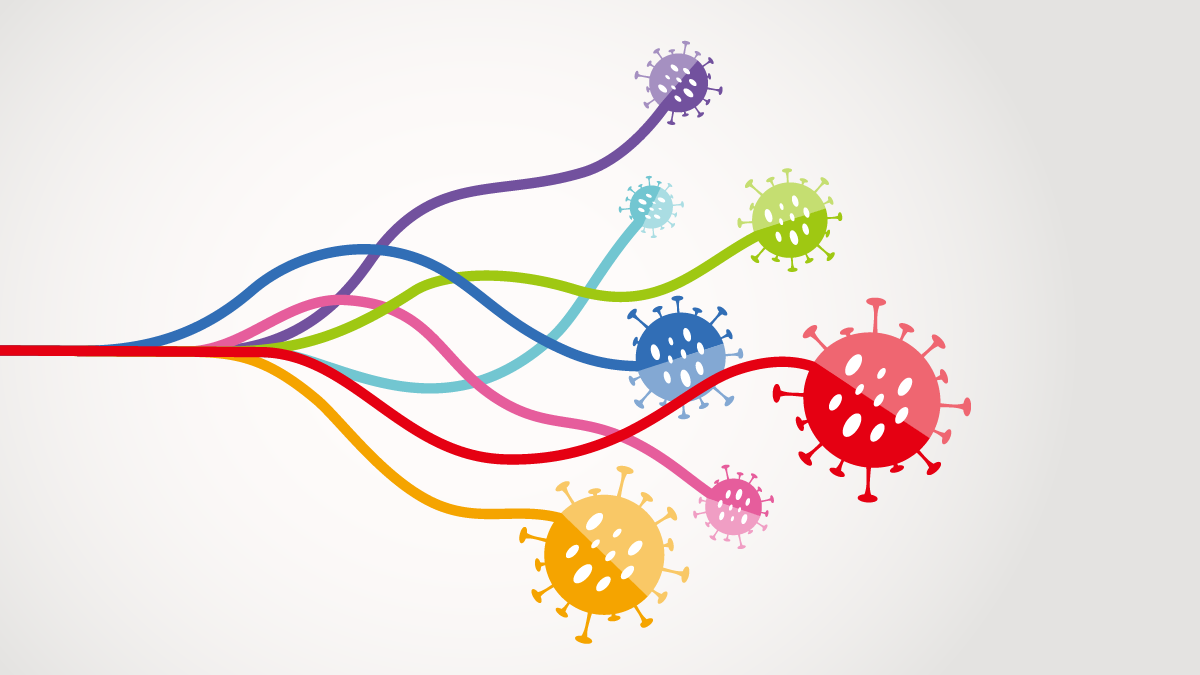
Third, the virus is mutating itself like it is part of the Marvel Universe or something. The VARIANTS even sounds like a new movie in the franchise. Before we go deeper, here's a quick look back at the past 3 seasons.
To recap:

The worn trope of the actuary is that they are total introverts - practically invisible. The job no one has ever heard of and no can explain. It doesn't even sound like a real thing. They even refer to themselves as 'unicorns.'
It turns out that this sort of elusiveness may be in demand by the CIA - and in this case, not the Canadian Institute of Actuaries, but the actual US Government Central Intelligence Agency.

A recent job opportunity popped up on the Society of Actuaries Website and while the job title is for a Science, Technology, and Weapons Analyst, we all know that this is just a front. This is a chance to build a network of undercover actuaries, a legion of nerdy spies that will assess and mitigate risks with silent proficiency.

Cue the Liam Neeson voice over:
..what I do have are a very particular set of skills. Skills I have acquired over a very long career. Skills that make me a nightmare for people like you...
The only remaining question is how do you like your martini - shaken or stirred?
(This post will self destruct in 30 seconds)
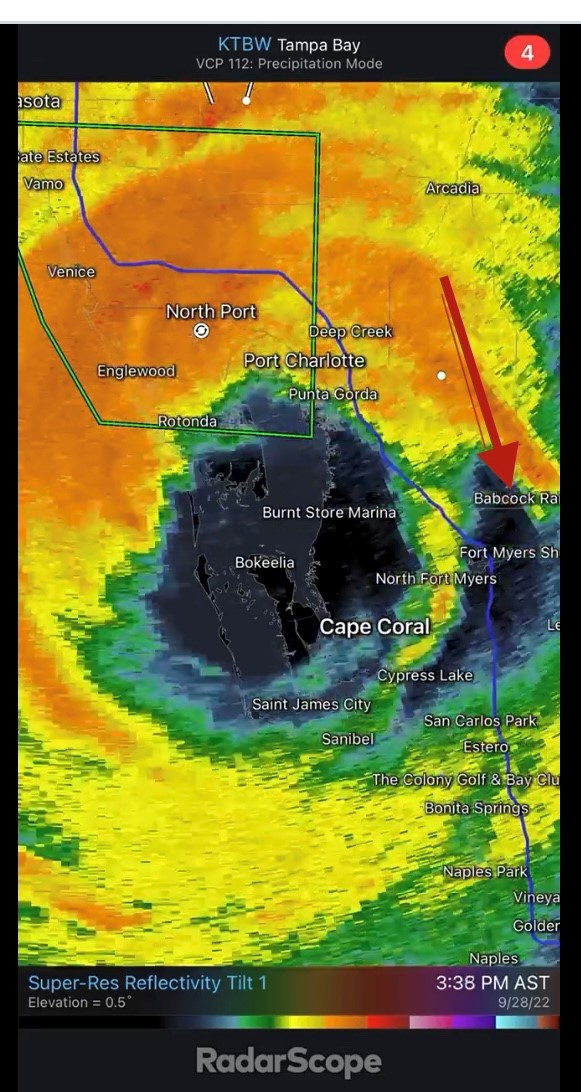
I went toe to toe with Hurricane Ian on September 28, 2022. This was probably the craziest day of my life.
After 48 hours of anticipation and anxiety we were on the receiving end of a furious storm, pummeling our house with 100mph winds for hours and hours and hours.
A storm we thought would miss us, came and punched us square in the nose.
This morning, the sun rose, and I am grateful for today.
To be here.
With my family.
With four walls and a roof.
And just 40 miles to the west of me, things have completely disappeared.
And as I process through this, the thoughts that ring in my ears are bitingly poignant clichés about how precious our moments are.
How delicate and fragile we are.
How we need to continually to return to what really matters in this very short, very crazy, very beautiful life.
And of course, being an actuary, I am thinking about uncertainty and risk.
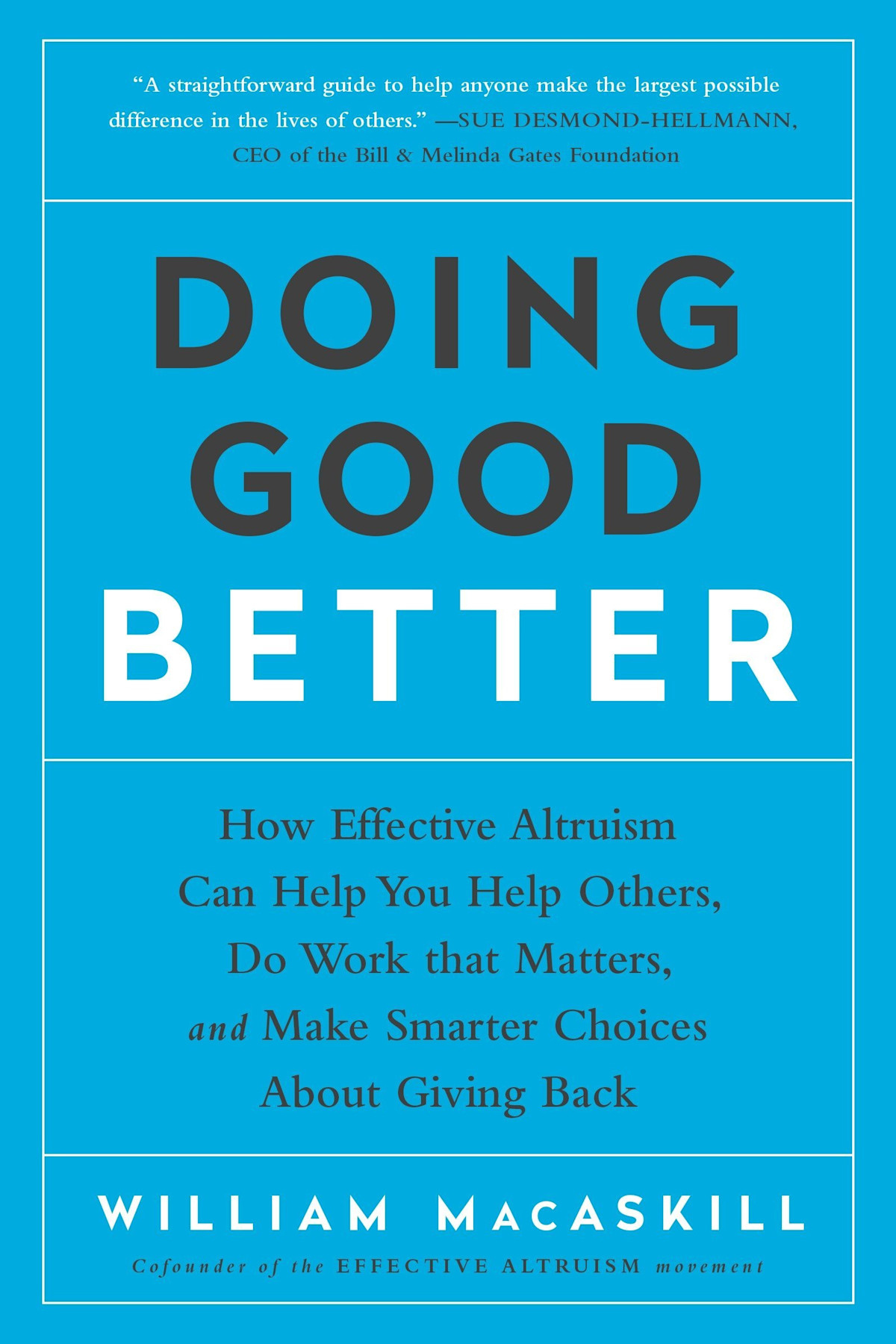
I didn't realize that donating to charity could be an actuarial exercise! Yet after reading Doing Good Better by William Macaskill, I've realized yet another application of this skill set.
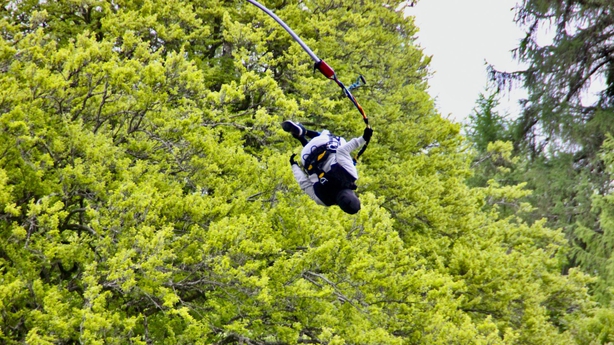
Happily, this post is not parody - it really happened! Congrats to Francois-Marie Dibon who more than doubled the prior record.
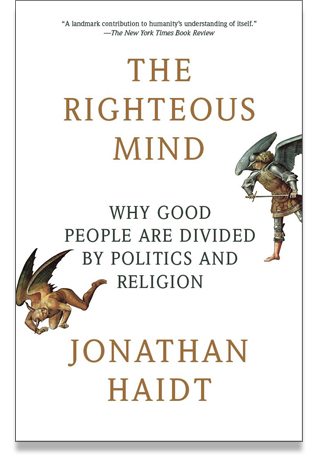
The Righteous Mind is a book about morals. At first glance, morality may belong to the realm of philosophers and theologians, but not actuaries. Indeed, it may be hard to find a discourse on the greater good in a statistics text book. Yet, there are three reasons I think actuaries will find this book appealing:
Inspired by recent activity on Twitter, a nationally recognized amusement park design firm is entering a concept phase for a new niche attraction.
The impetus of the idea came out of an exchange on the popularity of Bayesian Statistics - to which one @loveactuary responded "in actuaryland we love em" - to which @EvanSparks chimed in "Actuaryland: the theme park where all the roller coasters have accurate forecast for how long a guest can ride before throwing up." This is now commonly referred to as the Puke Index.
And thus a concept is born.

Like all theme parks, the admission price will likely cost a small fortune. @nateworrell went as far to say that all tickets will have to be 'prefunded.'
Even with a ticket, the entry into the park will likely require patrons to have to pass through a series of entry requirements, each one mentally and emotionally demanding. Less than half of ticketed guests are expected to actually make it into the park.
Once in the park there are several marquee attractions. Of course lines and wait times are going to be unavoidable - @Catuary1 adds a new twist with a policy not to disclose estimated wait times to park goers. Instead "they will roughly tell you how long the wait is but it is very vague...". This should certainly ramp up the levels of anxiety and apprehension!
And as you read the descriptions, it is important to remember that in Actuaryland "all the rides are simulations" (@nateworrell):

Here we go with round 3 of the Corona series!
Chronicle/Recap:

Recently, the SOA announced new ways to get credit toward an actuarial credential via university credit. The approach was viewed with mixed results. The SOA claimed the initiative was motivated to foster inclusion. The Organization of Latino Actuaries wrote a public letter asking the SOA to withdraw the program on the basis that it is counterproductive to inclusivity goals.
Whether or not the SOA goes back to the drawing board remains to be seen. In the interim other means of credentialing actuaries are emerging.

Actuarial authors of the 14th Speculative Fiction contest wrote stories (or graphic novel, play, or transcript) that cover social issues, political unrest, and pandemic and climate crises. Yet, amidst the dystopia, there's a constant call to appeal to our better angels.

Last year I posted "When a Virus Goes Viral" -
Since then, I grew and shaved a corona beard:


I made some good progress on my Netflix backlog.
It seem the rest of the world has been doing the best it can to get through the pandemic. How are you doing folks?
I wanted to do some reflecting and revisiting. As a recap, there are 3 items that I was curious about:
Disclaimers: These observations are U.S. oriented.
As I was scanning through the world of Speculative Fiction*, looking for inspiration for my next entry in to the Society of Actuaries Speculative Fiction contest, I found, and fell in love with, the writing of Octavia Butler.

"Speech Sounds" is a short story that somehow manages to capture the entirety of the human experience, our demons and our angels, in 20 pages. It features a woman trying to survive in the middle of a pandemic that impairs our ability to communicate. Sometimes fictions mirrors reality quite well.
I take refuge in Octavia's words about the story in the afterword:
“Speech Sounds” was conceived in weariness, depression, and sorrow. I began the story feeling little hope or liking for the human species, but by the time I reached the end of it, my hope had come back. It always seems to do that."
Perhaps it is not too surprising that we find our world reflected in her writings. While we might not have to deal with telepathic vampires, we certainly do live in a world that has to deal with the consequences of the human tendency to create hierarchies.
In her NPR essay, Octavia posits that we might be fatally destined to cycles of domination. Yet, she concludes with the following question:
Amid all this, does tolerance have a chance?
Only if we want it to. Only when we want it to. Tolerance, like any aspect of peace, is forever a work in progress, never completed, and, if we're as intelligent as we like to think we are, never abandoned.
But what do her musings on the human condition have to do with being an actuary?


